
A4 Scanner Wholesale Supplier in India
Rudraksh Industries is a Nehru Place, Delhi-based A4 Scanner supplier in India, sourcing flatbed, sheet-fed and high-speed document scanners for corporate offices, banks, schools and government record-digitisation projects, matched to actual document volume and scan-quality needs rather than sold off a generic specification sheet.
An A4 scanner purchase looks simple until it turns out to be the wrong one for the job. A flatbed model that works perfectly well for occasional ID-card or photo scanning will become a serious bottleneck if handed a records-digitisation project involving thousands of loose pages, while a high-speed automatic document feeder scanner bought for that same digitisation project would be needless overkill for a reception desk that scans a handful of pages a day. As an A4 Scanner dealer in India working with offices, banks, educational institutions and government departments across Delhi NCR, we start every enquiry by understanding the actual document type and volume, because that single question determines whether a flatbed, sheet-fed or production-grade scanner is the right recommendation.
We work as both a retail-facing A4 Scanner dealer in India for single-desk and reception-counter purchases, and as a structured A4 Scanner wholesale supplier India for banks, government records departments, educational institutions and system integrators running large-scale digitisation projects that need multiple scanners deployed, networked and supported on a schedule. Whether you found us searching for an A4 Scanner supplier near me India in the Nehru Place / Okhla / South Delhi belt, or you are a records officer elsewhere in the country comparing an A4 Scanner manufacturers and suppliers India shortlist for a multi-department digitisation rollout, we quote against your actual document type, volume and output requirement instead of a one-size-fits-all model picked from a catalogue.
Document scanning sits behind a surprising number of daily operations across very different institutions. Banks and NBFCs scan KYC documents, loan applications and cheques as a matter of daily compliance workflow; government departments and PSU offices run records-digitisation projects converting decades of paper files into searchable archives; schools and colleges scan admission forms, mark sheets and certificates for both digital record-keeping and student verification; hospitals and clinics scan prescriptions, lab reports and insurance paperwork where accuracy and speed both affect patient service; and legal firms scan contracts and case files where OCR-searchable text turns a physical archive into something a lawyer can actually query in seconds rather than dig through by hand. Each of these settings puts a genuinely different demand on scan speed, document handling gentleness and output format, which is why we treat scanner selection as a workflow conversation rather than a single-spec hardware sale, and why the same headline pages-per-minute figure can mean an excellent fit for one institution and a poor one for another depending on what is actually being scanned.
Flatbed and Sheet-Fed A4 Scanners for Every Document Workflow
From an occasional-use flatbed unit for a reception desk to a high-speed automatic document feeder scanner for a records-digitisation project, we match the scanner type to your actual document handling needs, because the wrong scanner type is the most common reason a digitisation project falls behind schedule. We also confirm the target output format and OCR requirement up front, so a project's scanned archive is usable immediately rather than needing a costly reprocessing pass later.
How to Choose the Right A4 Scanner Solution
Flatbed vs Sheet-Fed vs High-Speed Document Scanners
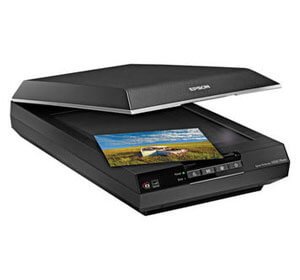
Flatbed scanners, where a document or object is placed on a glass platen, remain the right choice for delicate, bound, or irregularly shaped originals — books, ID cards, photographs, certificates that cannot safely pass through a feeder mechanism. Sheet-fed scanners with an automatic document feeder (ADF) are built for loose, single-sheet A4 pages and are dramatically faster for routine office scanning of letters, invoices and forms, feeding a stack of pages through automatically instead of requiring one placement per page. High-speed production scanners, a step up from standard sheet-fed office units, are designed for sustained, high-volume digitisation work — hundreds or thousands of pages a day — with more robust feed mechanisms, faster optical sensors and features like ultrasonic double-feed detection that catches pages accidentally pulled through together, which matters enormously on a large records-digitisation project where a missed page can mean a missing record.
Scan Resolution, Colour Depth and Output Quality
Resolution requirements depend heavily on document type and end use: standard office documents scan perfectly well at 200-300 DPI for archival and OCR purposes, while photographs, artwork or documents requiring fine detail preservation genuinely benefit from a higher setting of 600 DPI or more. Colour depth matters for documents where colour carries information — stamps, seals, coloured ink annotations, photographs — while pure black-and-white text documents can often be scanned in a lighter-weight mode that produces smaller file sizes without losing legibility. We discuss end use (archival storage, OCR text extraction, print reproduction) before recommending a resolution and colour setting, since defaulting to the highest resolution available generates unnecessarily large files that slow down a digitisation project's storage and retrieval performance.
Scan Speed and Duty Cycle for Volume Digitisation
Scan speed, quoted in pages per minute, and daily duty cycle (the maximum recommended pages per day) both matter enormously for a records-digitisation project with a deadline. A scanner rated for light office use but pushed into a sustained high-volume digitisation project will show wear on its feed rollers and pickup mechanism far sooner than its rated lifespan suggests, leading to jams, misfeeds and unplanned downtime exactly when a project timeline cannot afford to absorb delays or slip past an agreed completion date. We size scanner class to genuine project volume, recommending production-grade hardware for sustained digitisation work rather than under-specifying to save on upfront cost and risking the project timeline instead.
Image Processing Features: Auto-Crop, Deskew and Blank Page Removal
Automatic image-processing features built into modern document scanners — auto-crop to the page edge, auto-deskew to straighten a page fed in slightly crooked, automatic blank-page removal on duplex scan runs, and background colour cleanup — save enormous manual editing time on large-volume projects where thousands of pages would otherwise need individual correction. We check which of these features are hardware-accelerated (processed by the scanner itself in real time) versus software-only (requiring a separate post-processing pass) when comparing models for high-volume digitisation work, since hardware-accelerated processing keeps overall project throughput closer to the scanner's rated pages-per-minute speed.
OCR, Searchable PDF and Document Management Integration
Optical Character Recognition (OCR) software converts scanned page images into searchable, selectable text, which is essential for any digitisation project intending to make archived documents text-searchable rather than simply stored as static images. Bundled OCR software quality varies between scanner brands and price tiers, and for government records or legal-document digitisation projects where accuracy matters considerably, we discuss OCR accuracy expectations and, where needed, integration with an existing document-management system so scanned output lands directly in the right folder structure or database rather than requiring manual filing after the fact.
Double-Feed Detection and Damaged Document Handling
Ultrasonic or infrared double-feed detection, standard on higher-end sheet-fed and production scanners, senses when two pages have been pulled through the feeder together and pauses the scan run rather than silently skipping a page — a feature that matters enormously for records digitisation where a missed page can mean an incomplete legal or government record. For digitisation projects involving older, damaged, or fragile physical documents, we also discuss gentler feed-path options and manual flatbed fallback for pages too fragile to risk through an automatic feeder, since a torn original cannot be undone once it happens, and no digitisation deadline is worth risking damage to an irreplaceable original such as a land record, historical certificate or court file.
File Formats and Long-Term Archival Compliance
Searchable PDF is the practical default for most office and institutional scanning, combining a readable page image with an underlying OCR text layer for search and copy-paste. For long-term government and legal archival where format stability matters over decades, PDF/A (an ISO-standardised archival variant of PDF designed to remain readable regardless of future software changes) is increasingly specified in institutional digitisation tenders, and TIFF remains a common choice for master archival copies in library and records-management contexts where maximum image fidelity matters more than file size. We flag which output format a given project should target during specification, since converting an already-scanned archive to a different format later is far more expensive than choosing correctly up front.
Government, Institutional and Records Digitisation Supply
Rudraksh Industries is a gov registered supplier India on the Government e-Marketplace, and we regularly quote A4 scanners against government tender bid India requirements for records-digitisation projects, court and land-registry document archives, and PSU office modernisation initiatives that need reliable, high-volume scanning hardware. If you are a gov bid contractors India firm assembling a records-digitisation package for a composite tender, or a department issuing an e-tender bid supplier India notice for a scanning project, we can supply the hardware, discuss OCR and workflow integration, and act as a gov bid consultant near me India resource on scanner-class specification so the tender document reflects realistic project volume and timeline rather than a copy-pasted specification from an unrelated earlier tender that may not fit the archive actually being digitised.
Bulk and Wholesale Buying for Digitisation Projects
For banks, government records departments, educational institutions and system integrators running multi-site digitisation projects, we operate as an A4 Scanner bulk wholesaler in India with volume pricing that scales with order size, staggered delivery matched to a project rollout schedule, and one consolidated GST invoice instead of scattered single-unit purchase orders. Organisations evaluating the wholesale market in India for scanner procurement typically find that standardising on one wholesale supplier India partner across a multi-branch digitisation project keeps hardware consistent, which simplifies staff training and troubleshooting compared to sourcing scanners site-by-site from different local vendors with inconsistent hardware and inconsistent after-sales support.
Finding a Reliable Local Partner
Search intent behind an A4 Scanner dealer near me India or A4 Scanner nearest supplier in India query is usually about who can recommend the right scanner class honestly, deliver on a project timeline, and still answer the phone when a feed roller needs replacement mid-project. Being based in Nehru Place puts our sales and service team within same-day reach of most of Delhi NCR, while our dealer network India extends coverage to other states for larger institutional and government digitisation rollouts that need consistent hardware and support across multiple locations.
Compact and Portable Scanners for Field or Mobile Use
Compact, lightweight A4 scanners — some battery-powered and USB-bus-powered with no separate power adapter needed — suit field agents, insurance surveyors, sales teams and government field officers who need to digitise documents on-site rather than carrying originals back to an office. These units trade some speed and duty cycle for portability, and are a genuinely different product category from a desk-bound office scanner, so we ask directly whether a scanner needs to travel before recommending a model, since a portable unit pressed into sustained office duty will wear out faster than its design intends, and the money saved on a smaller portable unit is often lost again in early replacement cost once that mismatch becomes apparent.
Networked and Shared Scanning for Multi-User Offices
For offices where several staff need scanning access, a network-connected scanner (or a multifunction printer with scanning capability) that can scan directly to a shared network folder, email address or cloud storage location removes the bottleneck of a single USB-tethered scanner queue. We discuss scan-to-destination requirements — network folder, email, specific cloud storage, or integration with an existing document-management system — during specification, since not every entry-level scanner supports network scanning out of the box, and retrofitting that capability later is rarely straightforward. For offices already running a networked multifunction printer with scanning capability, it is often worth checking whether that existing device can absorb shared scanning needs before purchasing a separate standalone unit, since consolidating onto fewer networked devices reduces both hardware cost and the number of machines IT staff need to maintain.
Genuine Hardware, Warranty and the Grey-Market Risk
Unbranded or grey-market scanner units, and scanners sourced without proper local warranty backing, are a common source of complaint once a feed roller wears out or a sensor starts producing streaked scans, because there is often no local service point to turn to and no genuine replacement parts readily available. As an authorized dealer in India for the scanner brands we carry, every unit we supply comes with manufacturer warranty and access to genuine consumable parts, and our after-sales team handles service calls and parts sourcing directly rather than leaving a customer to chase an anonymous online listing for support months after purchase.
Maintenance, Consumable Parts and Uptime for Digitisation Projects
Feed rollers, pickup tyres and separation pads on sheet-fed scanners are consumable parts that wear with use and need periodic replacement to maintain reliable, jam-free feeding, particularly on high-volume digitisation projects running thousands of pages a week. We stock genuine replacement parts for the scanner brands we carry and can set up a scheduled maintenance visit for large digitisation projects, so a worn feed roller is replaced proactively before it starts causing misfeeds and double-feeds that put project accuracy at risk during a records-digitisation deadline. For very large digitisation contracts spanning several months, we can structure a phased maintenance schedule tied to actual cumulative page counts rather than a fixed calendar interval, since a scanner running well above its typical office duty cycle wears its consumable parts faster than a manufacturer's default service schedule assumes.
Why Businesses Choose Rudraksh Industries for A4 Scanner
Rudraksh Industries is not a pure retail scanner shop bolting hardware onto an unrelated catalogue — we are an established IT, AV and networking dealer-distributor from Nehru Place, Delhi with an existing GeM registration, an existing government and corporate client base, and the back-office (GST billing, delivery documentation, project-scale service contracts) already built for structured B2B and institutional supply. That means when a bank, government department or educational institution runs a records-digitisation project, we can supply scanning hardware, discuss OCR and workflow integration, and support the project through its timeline under a single vendor relationship instead of coordinating with a separate, unfamiliar scanner-only supplier. Our team recommends scanner class against genuine document volume and type rather than pushing whichever model carries the highest margin, is transparent about the trade-offs between flatbed, sheet-fed and production-grade hardware, and stands behind every unit with genuine consumable parts and a real service relationship rather than a warranty card nobody follows up on. For institutional buyers planning a large digitisation project, we can also advise on realistic project timelines given a chosen scanner class's rated throughput, so a procurement decision and a project deadline are set with the same realistic numbers rather than a hardware purchase made in isolation from the schedule it needs to support.
Bulk & GeM Procurement for A4 Scanner
Rudraksh Industries is a GeM-registered dealer, distributor, supplier and wholesaler for A4 Scanner in India, supporting both direct wholesale/bulk orders and formal government tender procurement through the Government e-Marketplace (GeM). Corporate offices, educational institutions, retail chains and system integrators regularly need A4 Scanner in quantities beyond a single-unit purchase, and as a wholesale distributor we structure pricing, delivery scheduling and configuration standardisation specifically around bulk requirements — one point of contact, consistent configuration, volume-based pricing and one consolidated GST invoice.
Why Buy A4 Scanner From Rudraksh Industries
Every order — one unit or two hundred — runs through the same GST-invoiced, GeM-compliant process.
Explore our Homepage
Frequently Asked Questions
What is the difference between a flatbed and a sheet-fed A4 scanner?
A flatbed scanner places the document on a glass platen and is the right choice for books, ID cards, photographs and any bound or delicate original that cannot safely pass through a feeder. A sheet-fed scanner uses an automatic document feeder to pull loose A4 pages through one after another, which is dramatically faster for routine office scanning of letters, invoices and forms but is not suitable for bound or fragile originals.
What scan resolution do we actually need for our documents?
Standard office documents scan perfectly well at 200-300 DPI for archival storage and OCR text extraction, while photographs or documents requiring fine detail preservation benefit from 600 DPI or higher. Defaulting to the highest available resolution generates unnecessarily large files that slow down storage and retrieval, so we recommend resolution based on the actual end use rather than a blanket maximum setting.
How do we avoid missing pages during a large records-digitisation project?
Ultrasonic or infrared double-feed detection, available on higher-end sheet-fed and production scanners, senses when two pages have been pulled through the feeder together and pauses the scan run rather than silently skipping a page. This feature is essential for any digitisation project where a missed page could mean an incomplete legal, financial or government record, and we recommend it as a non-negotiable specification for volume digitisation work.
Can Rudraksh Industries supply scanners against a government tender or GeM bid for a records-digitisation project?
Yes. We are a GeM-registered supplier and regularly quote A4 scanners against government tender and e-tender requirements for records-digitisation projects, court and land-registry archives, and PSU modernisation initiatives, including OCR and workflow integration discussion as part of the specification. We can also act as a technical consultant on scanner-class selection before a tender is finalised.
Do you offer bulk pricing for multi-branch digitisation projects?
Yes. For banks, government departments and educational institutions running multi-site digitisation projects, we quote wholesale-tier pricing that scales with order volume, coordinate delivery against your project schedule, and consolidate billing into a single GST invoice instead of multiple site-by-site purchases.
What maintenance does a high-volume document scanner actually need?
Feed rollers, pickup tyres and separation pads wear with use on sheet-fed scanners and need periodic replacement to maintain reliable feeding, particularly on projects running thousands of pages a week. We stock genuine replacement parts for the brands we carry and can schedule proactive maintenance for large digitisation projects, so worn parts are replaced before they start causing jams and misfeeds mid-project.
What file format should we scan into for long-term government or legal archival?
Searchable PDF is the practical default for everyday office scanning, but for long-term government and legal archival where format stability matters over decades, PDF/A is the ISO-standardised archival variant increasingly specified in institutional digitisation tenders. TIFF remains common for master archival copies where maximum image fidelity matters more than file size. We recommend confirming the target format before a large project starts, since converting an already-scanned archive later is significantly more expensive.
Can a portable scanner be used for regular office work instead of a desk-bound unit?
It can, but it is not the ideal choice for sustained daily office volume, since portable and battery-powered scanners are engineered for occasional field use rather than continuous desk duty and will show wear sooner under that load. We recommend a portable unit specifically for field agents, surveyors or mobile staff, and a proper desk-bound sheet-fed or flatbed unit for regular office-based scanning.